
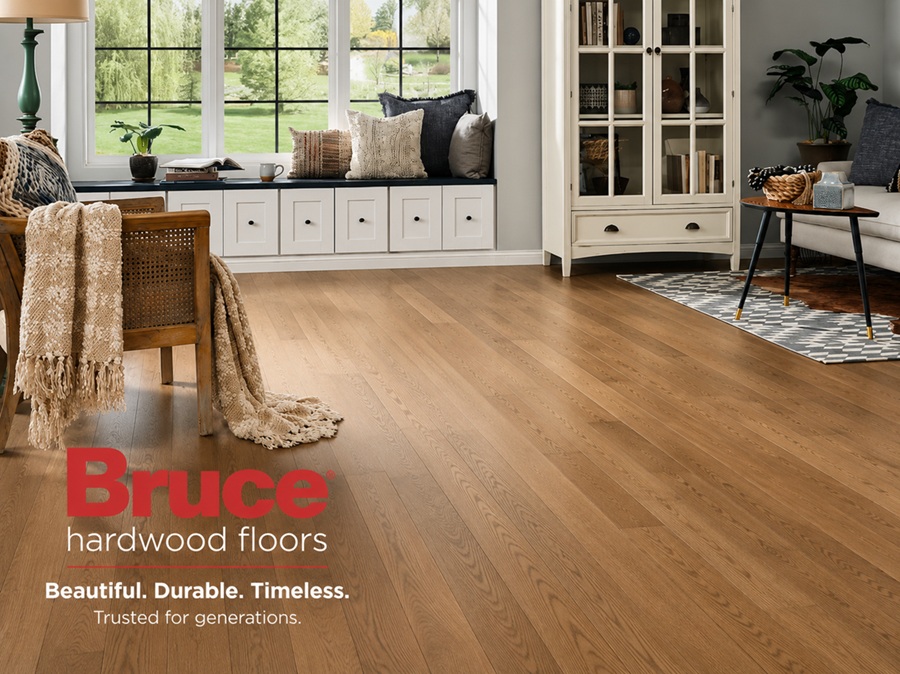

Bruce is one of the oldest and most recognizable hardwood flooring brands in America, offering both solid and engineered wood floors in popular domestic species like oak, hickory, and maple. With a history stretching back well over a century, Bruce has built its reputation on affordable, American-made hardwood that is widely available and comes mostly prefinished with a tough aluminum oxide coating for scratch resistance. If you want quality real-wood flooring at a mid-range price you can find easily, Bruce is a name that consistently comes up.
The brand covers a broad range, from traditional narrow strips to wide rustic planks, and in finishes from smooth to hand-scraped, so it suits many styles and budgets. This guide breaks down the two main flooring types, the wood species and finishes on offer, how refinishing works, what it costs, and the honest pros and cons, so you can decide whether Bruce is the right floor for your home.
| Brand | Bruce (a long-established American hardwood maker) |
| Flooring types | Solid and engineered hardwood |
| Common species | Oak, hickory, maple, birch, cherry, walnut |
| Finish | Mostly prefinished, aluminum oxide coating |
| Finish styles | Smooth, hand-scraped, wire-brushed, distressed |
| Plank widths | Narrow strips up to wide planks (about 7.5 in) |
| Price bracket | Mid-range, competitively priced |
| Made in | The USA, from domestic species |
| Refinishing | Solid multiple times; engineered depends on wear layer |
Solid vs Engineered Bruce Flooring
Bruce offers two fundamentally different constructions, and choosing between them depends mostly on where you are installing. Solid hardwood is milled from a single piece of real wood, typically three-quarters of an inch thick, and delivers the classic look and longevity people associate with wood floors. Because it is all wood, it reacts to moisture, so Bruce recommends keeping it above ground and out of bathrooms and laundry rooms.
Engineered hardwood is built in layers, with a genuine hardwood veneer on top bonded over a crisscrossed plywood or dense wood core. That layered construction gives it more stability against humidity and temperature swings, which is why engineered floors can go where solid cannot, including basements, over concrete, and over radiant heating. For many modern homes, engineered is the more versatile and forgiving choice.
| Factor | Solid Hardwood | Engineered Hardwood |
| Construction | One piece of solid wood | Real veneer over a layered core |
| Best locations | Above-grade living spaces | Basements, concrete, radiant heat |
| Moisture stability | More sensitive | More stable |
| Refinishing | Multiple times | Once or twice, wear layer permitting |
| Feel and value | The classic solid-wood floor | Versatile and widely practical |
The Wood Species on Offer
Species determines both the look and the durability of your floor, and Bruce sticks largely to proven domestic hardwoods. Each has its own grain and hardness, so it is worth matching the wood to your traffic and taste.
- Oak, including red and white oak, the classic choice with straight grain and strong durability
- Hickory, very hard and dent-resistant with bold, rustic graining
- Maple, hard and clean-looking with a subtle, contemporary grain
- Birch, cherry, and walnut in select ranges for warmer or richer tones
Oak, maple, and hickory are among the harder species Bruce uses, which makes them the best choices for busy households with kids and pets. Softer woods like cherry offer beautiful color but show wear more readily, so think about how much traffic the floor will take before you fall for a particular look.
Finishes and Plank Styles
Bruce sells the vast majority of its flooring prefinished, meaning the protective coating is applied at the factory for a smooth, consistent surface and a faster installation with no on-site sanding or fumes. That finish is usually an aluminum oxide coating prized for its scratch resistance, with some products using polyurethane for extra wear and moisture defense.
Beyond the coating, you can choose the character of the surface. Smooth, traditional finishes suit formal spaces, while hand-scraped and wire-brushed textures bring a rustic, lived-in feel that also hides everyday wear well. Plank width shapes the look too: narrow strips read traditional and formal, while wide planks feel open and modern, and multi-width layouts lean rustic. Edge treatments, from crisp square edges to micro-bevels, further tune how defined each board looks.
Can You Refinish Bruce Floors?
Refinishing is one of the great advantages of real wood, and Bruce floors can generally be refinished, though how many times depends on the construction. Solid three-quarter-inch planks can be sanded and refinished several times over their life, letting you erase scratches and change the stain color as tastes evolve. Engineered floors can usually be refinished only once or twice, and only if their real-wood wear layer is thick enough, so thinner veneers limit the option. If long-term refinishing matters to you, favour solid wood or engineered lines with a generous wear layer.
What Bruce Flooring Costs
Bruce sits comfortably in the mid-range of the hardwood market, offering genuine American wood at prices friendlier than many premium brands, which is a big part of its appeal. Exact pricing depends on the species, the plank dimensions, the finish, and the construction, with wider planks and rarer species costing more. Because Bruce is stocked widely, including at big-box retailers, it is easy to compare options and find sales. Remember to budget for underlayment, trim, and installation on top of the flooring itself, since labour can rival or exceed the material cost.
Strengths and Drawbacks
| Strengths | Drawbacks |
| Trusted, long-established American brand | Standard lines are not waterproof |
| Both solid and engineered options | Micro-bevel grooves can collect dust |
| Durable aluminum oxide prefinish | Some warranties exclude certain rooms |
| Wide choice of species and finishes | Unfinished options are limited |
| Mid-range price, easy to find | Engineered refinishing is limited |
Caring for Your Hardwood
Hardwood rewards simple, consistent care. Sweep or dust regularly to keep grit from scratching the finish, and clean with a product made for hardwood rather than soaking the floor, since standing water is wood’s enemy. Use felt pads under furniture legs, place mats at entrances to catch dirt, and wipe spills promptly. With that light routine, a Bruce floor keeps its look for many years, and when it finally shows its age, the option to refinish gives real wood a second life that few other floors can match.
Frequently Asked Questions
Is Bruce hardwood flooring good quality?
It is regarded as solid, good-value flooring in the mid-range bracket, using genuine American hardwood and a durable factory finish. It is a strong choice for affordable, widely available real-wood floors, especially in oak.
Is Bruce flooring solid or engineered?
Both. Bruce makes solid hardwood milled from one piece of wood and engineered hardwood with a real veneer over a layered core. Engineered suits basements, concrete, and radiant heat, while solid is for above-grade rooms.
Is Bruce hardwood waterproof?
Standard Bruce hardwood is not waterproof, since it is real wood. Certain water-resistant engineered lines offer added protection against spills for a limited time, but no hardwood should be treated as fully waterproof.
Can Bruce floors be refinished?
Solid Bruce floors can be sanded and refinished several times, while engineered floors can usually be refinished once or twice if the wear layer is thick enough. Refinishing removes scratches and lets you change the color.
Where should I not install Bruce solid hardwood?
Avoid moisture-prone areas like bathrooms, laundry rooms, and basements for solid hardwood. For those spaces, choose engineered hardwood, which handles humidity and concrete subfloors far better.
Matching the Floor to Your Room
The smartest way to shop Bruce is to start with the room rather than the sample that catches your eye, because the space dictates which construction and species will actually perform. Ground-floor and upper-floor living areas that stay dry are perfect for solid hardwood, where its refinishing life and classic feel shine. Basements, rooms over concrete slabs, and homes with radiant heat call for engineered, which stays stable where solid would cup or gap.
Traffic is the next filter. A busy family entryway, hallway, or kitchen benefits from a harder species like oak or hickory and a textured hand-scraped or wire-brushed finish that disguises the scuffs of daily life. A quiet formal room can carry a softer wood or a smooth finish that shows off the grain. Thinking this way, room by room, keeps you from choosing a beautiful floor that is wrong for where it will live.
- Dry, above-grade rooms: solid hardwood for longevity and refinishing
- Basements, concrete, or radiant heat: engineered for stability
- High-traffic areas: harder species and a textured finish
- Formal, low-traffic rooms: softer woods or smooth finishes are fine
- Always confirm the warranty covers your intended room and subfloor
Final Thoughts
Bruce hardwood flooring earns its long-standing popularity by delivering real American wood in a wide range of species and finishes at a fair, mid-range price, with the easy availability few brands match. Choose solid for classic above-grade rooms and the most refinishing life, or engineered for basements, concrete, and radiant heat. Pick a harder species like oak or hickory for busy homes, care for it simply, and you get a warm, durable floor that can be refreshed for decades to come.