
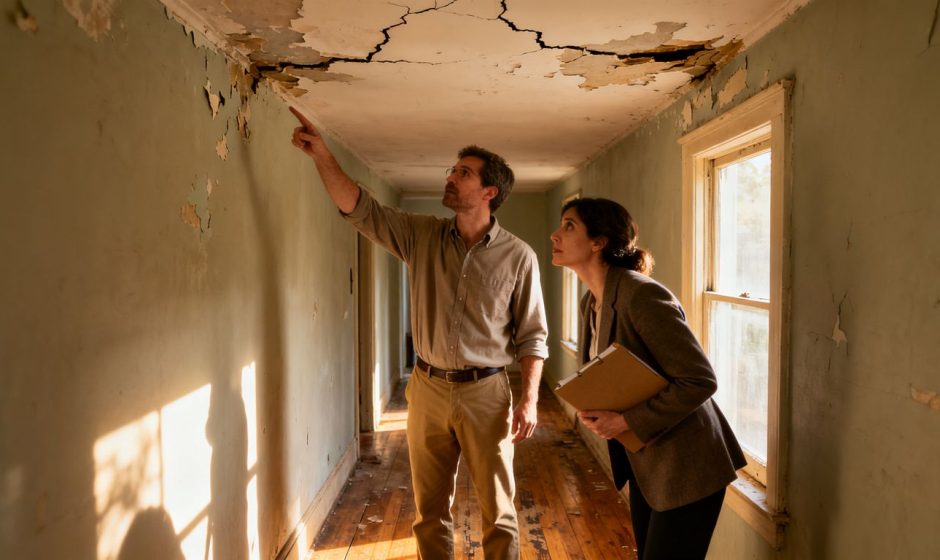

Asbestos was used in a range of building products for durability, insulation, and heat resistance, so it can turn up in more than one part of an older house. Its presence cannot be confirmed from age or appearance alone, and many materials remain in place without becoming an immediate concern. For buyers, knowing common locations helps guide questions and further evaluation rather than making a diagnosis during a walkthrough.
Vinyl floor tiles, backing, and adhesive
Older resilient flooring may include vinyl or asphalt tiles, sheet flooring, backing, or the adhesive beneath it. A floor can have several layers from different renovation periods, making the visible surface a poor guide to what lies underneath. If flooring is intact and will remain undisturbed, buyers may simply document its condition and ask about its history; planned removal calls for more careful follow-up.
Pipe, boiler, and duct insulation
Insulation around heating equipment, pipes, boilers, and ducts is another area that may warrant attention, particularly in utility spaces and basements. Some older insulating materials were applied as a coating or wrapped around pipes, while others may be hidden behind covers or panels. Buyers should avoid touching or moving it to get a closer look, especially if it appears worn or damaged.
Roofing, siding, and cement products
Some older roofing, siding, and cement-based building products may contain asbestos. These materials are often outdoors and can weather over time, but age or a cement-like appearance does not establish what they contain. Their condition, location, and any proposed repair or replacement are more useful questions to raise with a qualified professional.
Textured ceilings and wall compounds
Textured ceiling finishes and some wall or joint compounds are among the interior materials buyers may wonder about. Renovations can leave different finishes in adjoining rooms, and a patch or newer coat may cover older material. A older-home asbestos overview can provide broader context, but a visual walkthrough still cannot confirm whether a particular ceiling or wall product contains asbestos.
Red flags to notice during a walkthrough
A walkthrough is an opportunity to note conditions and ask questions, not to identify asbestos by sight. Damaged materials, unfinished renovation areas, and inconsistent answers about past work may justify follow-up, but none alone proves that asbestos is present. The safest approach is to record what is visible and avoid disturbing anything that appears suspect.
Damaged, crumbling, or exposed materials
Look for insulation that is torn or deteriorating, damaged floor coverings, broken panels, or debris near older building materials. The condition matters because damaged material may be more likely to release fibers if it is disturbed, though an observer cannot determine exposure risk simply by looking. Condition is a reason to pause, keep clear of the area, and ask how it should be assessed.
Renovation debris or signs of unpermitted work
Unfinished work can reveal that older layers were cut, scraped, or removed, and leftover debris may raise questions about how the work was handled. Look for patched ceilings, removed flooring, open walls, or materials stored near a renovation area. These clues do not establish whether asbestos was involved, but they can help a buyer ask what work was done, when it occurred, and whether records are available.
Materials that should not be identified by appearance alone
Color, texture, age, and location are not reliable ways to confirm asbestos. Similar-looking products may have different ingredients, and a newer-looking surface may cover an older layer. A buyer should not treat a visual guess as a test result or as reassurance that a material is asbestos-free; confirmation requires appropriate professional evaluation and, when warranted, sampling and laboratory analysis.
What the home’s age and records can reveal
A home’s age can help frame the questions a buyer asks, but it is not a verdict about its materials. Construction methods and product use changed over time, and later renovations may have introduced or covered materials from different periods. Records can add useful context, although incomplete paperwork is common and should be considered alongside the home’s visible condition and planned work.
Why construction and renovation dates matter
The original construction date offers a starting point for understanding which building products may have been used. Renovation dates matter too: a kitchen updated decades after the home was built may contain a mix of older and newer materials. Since materials and rules have varied by place and period, a date can guide follow-up but cannot establish that asbestos is either present or absent.
Permits and renovation records worth requesting
When available, renovation records can help explain what was replaced, what remains, and whether work involved areas that now concern the buyer. It can be useful to request a few specific kinds of documentation:
- Permits or inspection records for major renovations
- Contractor invoices or written descriptions of completed work
- Reports or laboratory results from earlier asbestos evaluations
- Receipts or records describing flooring, insulation, or ceiling replacement
These documents may clarify the scope and timing of work, but they do not necessarily account for every material in the house. A record stating that one room was renovated, for example, should not be treated as evidence about undisturbed materials elsewhere.
Gaps in the home’s history that may warrant follow-up
Missing records do not prove that work was improper or that a hazard exists; older homes often have incomplete histories. Still, unanswered questions can matter when visible materials are damaged or the buyer intends to renovate. The buyer can note what remains uncertain, ask the seller for any additional information, and decide whether a focused professional assessment fits the due-diligence timeline.
What an asbestos home inspection involves
An asbestos home inspection may mean different things depending on the professional and the scope arranged, so buyers should confirm what is included before booking. A visual assessment can identify materials that merit further attention, while testing is a separate step that involves collecting samples and having them analyzed. The distinction matters: an observation is not the same as a laboratory finding.
How a visual assessment differs from testing
During a visual assessment, a qualified professional may review accessible areas, note suspect materials, and consider their condition and location. That process can help determine where further inquiry may be appropriate, but it cannot confirm asbestos content without testing. Buyers should ask whether the service is limited to a visual review or includes sampling, and whether any areas will be inaccessible.
When a professional may collect samples
Sampling may be considered when a buyer needs to know whether a particular material contains asbestos, especially if it is damaged or planned work could disturb it. The decision depends on the material, the proposed scope of work, and applicable requirements. Sampling can involve disturbing a small portion of the material, so it should be handled by an appropriately qualified professional rather than attempted by the buyer.
How accredited laboratory results are used
Samples collected for testing are analyzed by a laboratory qualified or accredited for the relevant analysis. The resulting report can indicate whether asbestos was detected in the sampled material; it does not automatically describe every similar-looking material in the home. Buyers should review the report with the professional who arranged the assessment and ask how the findings relate to the materials and work under consideration.
What a standard home inspection may not cover
A general home inspection typically focuses on visible conditions and major systems, and asbestos sampling may fall outside its scope. Buyers should ask the inspector what the agreement includes rather than assume a standard inspection confirms whether asbestos is present. A separate standard inspection scope discussion can help explain why visual observations and specialized testing are not interchangeable.
How to handle suspected asbestos during due diligence
A concern raised during a walkthrough does not have to derail a purchase, but it should be handled deliberately. Buyers can preserve the condition of the material, obtain clear advice, and make sure the seller understands what further access may be needed. The goal is to replace assumptions with enough information to make a timely decision.
Avoid disturbing or sampling materials yourself
A buyer should not scrape, break, drill, sweep, or collect a sample from a material suspected of containing asbestos. Disturbing it can create unnecessary risk and may complicate a later professional assessment. If debris or damage is present, keep people away from the immediate area and seek advice on how to proceed instead of trying to clean or repair it.
Ask a qualified professional about next steps
The right professional can help determine whether the concern calls for observation, sampling, or another response based on the material and the buyer’s plans. When requesting advice, describe the location, visible condition, and any intended renovation without handling the material. Buyers should also ask about the professional’s qualifications, the proposed scope, how results will be reported, and the expected timing.
Clarify access and testing plans with the seller
If additional assessment is needed, the buyer and seller should agree on access, timing, and any permission required before work begins. Sampling may alter a small area, so the plan should state who will arrange it and how the affected spot will be left afterward. Clear coordination can prevent last-minute disputes and gives both parties a shared understanding of what the assessment can, and cannot, answer.
How findings can affect your purchase decision
A finding of asbestos does not by itself dictate whether a home is a sound purchase. The implications depend on the material’s condition, whether it will be disturbed, and the scope of any planned work. Buyers should weigh those practical details alongside the cost, timing, and terms of the transaction rather than treating the word “asbestos” as a complete assessment.
Compare management options, such as leaving materials undisturbed
If material is confirmed and intact, one possible approach may be to leave it in place and avoid disturbing it, with advice from a qualified professional. Other circumstances may call for repair, enclosure, or removal, particularly when material is damaged or renovation would affect it. The suitable option depends on the specific condition and proposed work, not a general rule applied to every home.
Get estimates for repair, enclosure, or removal
When work may be needed, buyers can request written estimates that describe the affected materials, proposed methods, preparation, and expected schedule. Estimates should be specific enough to distinguish a limited repair from a larger project and to show what is excluded. A qualified professional can help interpret the options, while the buyer should avoid assuming that a broad estimate applies to areas that were not assessed.
Consider timing, cost, and negotiation before closing
Testing, review, and any necessary work can take time, so buyers should compare the expected schedule with inspection and closing deadlines. Depending on the findings and the purchase agreement, the parties may discuss a price adjustment, a repair, a credit, or another arrangement; local rules and contract terms matter. With clear documentation and estimates in hand, the buyer can decide whether to proceed, seek revised terms, or step away without relying on guesswork.