
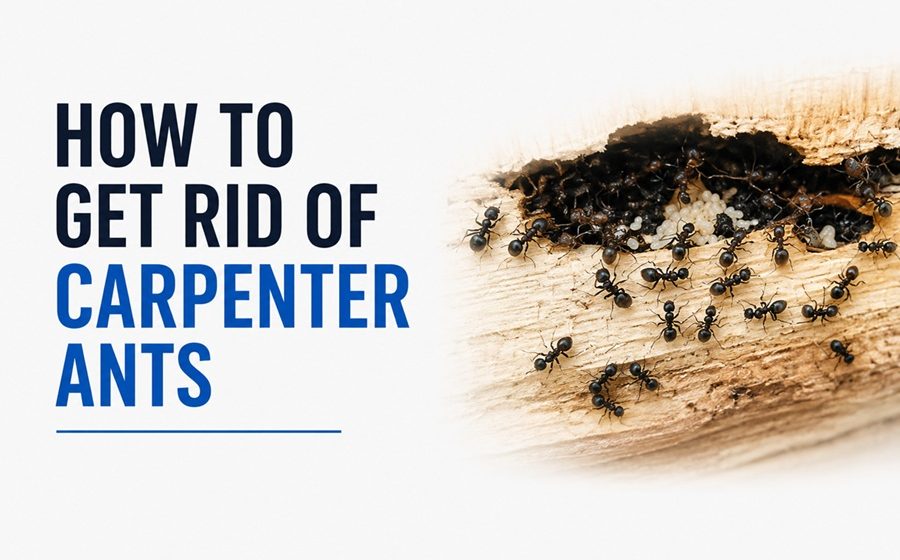

To get rid of carpenter ants, the key is to eliminate the nest rather than just the ants you see, which means locating the colony, using slow-acting ant baits that workers carry back to the nest, fixing the moisture and damp wood that attract them, and sealing the entry points they use to get inside. Simply spraying visible ants kills a few foragers but leaves the colony intact, so the infestation returns. Targeting the nest and removing what drew the ants in the first place is what actually solves the problem for good.
Carpenter ants are among the most persistent household pests because they nest in wood and often have hidden satellite nests inside homes connected to a larger parent colony outdoors. Getting rid of them takes a methodical approach rather than a quick spray. This guide walks through finding the nest, the treatment methods that work, correcting the conditions that attract them, and knowing when the job calls for a professional.
| Goal | Eliminate the nest, not just visible ants |
| Best method | Slow-acting baits carried back to the colony |
| Root cause | Moisture and damp, damaged wood |
| Key prevention | Fix leaks and seal entry points |
| Nest clue | Sawdust-like frass near wood |
| Common trap | Only spraying the foragers you see |
| Outdoor link | Indoor nests often connect to an outdoor colony |
| When to call a pro | Large, hidden, or recurring infestations |
First, Understand the Enemy
Carpenter ants do not eat wood; they tunnel through it to nest, favouring wood that is damp, decaying, or water-damaged. Many infestations involve a main parent nest outdoors, in a tree stump, woodpile, or moist soil, with satellite nests inside the home in areas like wall voids, around leaky pipes, or in damp framing. Understanding this structure explains why killing visible ants fails: the colony survives elsewhere and keeps sending out foragers.
It also explains why moisture is central to the whole problem. Carpenter ants are drawn to damp conditions, so a home with leaks, poor drainage, or damp wood is far more attractive to them. Solving an infestation permanently almost always involves fixing those conditions, not just applying treatment.
Step 1: Find the Nest
The most important step is locating the nest, since that is your treatment target. Carpenter ants leave clues if you know where to look, and following foraging trails often leads you toward the colony.
- Look for sawdust-like frass, often mixed with insect parts, near baseboards, windowsills, and wood
- Follow ant trails, especially at night when carpenter ants are most active
- Listen for faint rustling in walls in heavy infestations
- Check damp or damaged wood around leaks, windows, doors, and roofs
- Inspect outdoor areas like stumps, woodpiles, and tree branches touching the house
Step 2: Use Baits to Reach the Colony
Baiting is the most effective do-it-yourself method because it turns the ants against their own colony. Slow-acting baits are designed so foraging workers carry the bait back and share it, gradually killing the nest, including the queen, from within. The slow action is intentional; a bait that killed instantly would never reach the colony.
- Place ant baits along the trails and near entry points where you see activity.
- Resist the urge to spray the foragers, since you need them alive to carry bait home.
- Be patient, as it can take days to weeks for the bait to reach and affect the colony.
- Replenish baits as needed until activity stops.
- Keep baits away from children and pets, following the product directions.
Step 3: Fix the Moisture Problem
Because carpenter ants are drawn to damp wood, correcting moisture is essential both to eliminate the current infestation and to prevent a new one. Repair any plumbing or roof leaks, improve ventilation in damp areas like basements and crawlspaces, and address poor drainage that keeps soil and wood near the house wet. Replace any wood that is badly water-damaged or rotting, since it is prime nesting material. Removing the damp conditions makes your home far less inviting and stops the cycle of reinfestation.
Step 4: Seal Entry Points and Remove Attractions
Cutting off access and outdoor harborage reduces both the current problem and future ones. Carpenter ants often enter along branches, wires, or gaps, so eliminating those bridges and sealing openings helps keep them out.
- Seal cracks and gaps around windows, doors, pipes, and the foundation
- Trim tree and shrub branches so they do not touch the house
- Move woodpiles, mulch, and debris away from the foundation
- Remove tree stumps and dead wood from near the home
- Keep food sealed and clean up crumbs and spills that attract foragers
Step 5: Treat Nests Directly if Found
If you locate an actual nest, treating it directly speeds up control. Nests in wall voids or wood can be treated with an appropriate insecticidal dust or product labeled for carpenter ants, applied into the void according to the directions. Outdoor parent nests in stumps or soil can be treated at the source. Combining direct nest treatment with baiting and moisture correction gives the most thorough result, though care and correct product use are essential, which is one reason many people bring in a professional at this stage.
When to Call a Professional
Carpenter ant infestations can be stubborn, particularly when the nest is hidden inside walls or connected to a large outdoor colony. If you cannot locate the nest, if the infestation is extensive, or if it keeps returning despite your efforts, a pest professional has the tools and experience to track down and eliminate the colony and to identify the moisture issues feeding it. Given that carpenter ants damage wood over time, getting on top of a serious infestation promptly protects your home.
Frequently Asked Questions
Why do carpenter ants keep coming back?
Usually because the nest was never eliminated or the moisture that attracts them remains. Spraying visible ants kills foragers but not the colony, and damp, damaged wood keeps drawing new ants, so you must target the nest and fix the moisture.
Do ant baits really work on carpenter ants?
Yes, slow-acting baits are one of the most effective methods because workers carry the bait back to the colony, gradually killing it from within, including the queen. Patience is needed, since it can take days to weeks to work.
What attracts carpenter ants to a house?
Moisture and damp, damaged wood are the main draws, along with easy access from branches touching the house and available food. Fixing leaks, replacing rotten wood, and sealing entry points make a home far less attractive.
Should I spray carpenter ants I see?
It is usually counterproductive if you are baiting, because you need live foragers to carry bait back to the nest. Spraying kills a few ants but leaves the colony intact, so targeting the nest with baits works better.
Natural and Preventive Approaches
Alongside baiting and moisture control, some homeowners like to use gentler, natural tactics to discourage carpenter ants, especially as a supplement rather than a standalone cure. These can help reduce foraging and disrupt the trails ants follow, though they generally do not eliminate a colony on their own the way targeted baiting does.
Wiping down surfaces where ants travel with a diluted vinegar solution erases the invisible scent trails that guide foragers, which can temporarily reduce traffic. Keeping counters clean, storing food sealed, and promptly clearing crumbs removes the food that draws foragers indoors in the first place. Diatomaceous earth applied in dry cracks and voids can also deter ants, though it must stay dry to work.
The most powerful natural approach, though, is simply denying carpenter ants the damp wood they need. Because these ants depend on moisture, a dry, well-maintained home with no leaks or rotting wood is naturally resistant to them. Pairing these preventive habits with baiting for any active colony gives you both a solution to the current problem and lasting protection against the next one.
- Wipe ant trails with diluted vinegar to disrupt scent paths
- Keep food sealed and clean up crumbs and spills
- Use diatomaceous earth in dry cracks, keeping it dry
- Deny ants damp wood by fixing leaks and rot
- Pair prevention with baiting to clear active colonies
Final Thoughts
Getting rid of carpenter ants means going after the colony, not just the ants you see. Find the nest by following trails and frass, use slow-acting baits that workers carry home, and, crucially, fix the moisture and damp wood that attract them in the first place. Seal entry points, clear outdoor harborage, and treat nests directly where you find them. For hidden or persistent infestations, a professional can locate and eliminate the colony. Tackle it methodically and you can clear carpenter ants for good rather than fighting them again and again.