
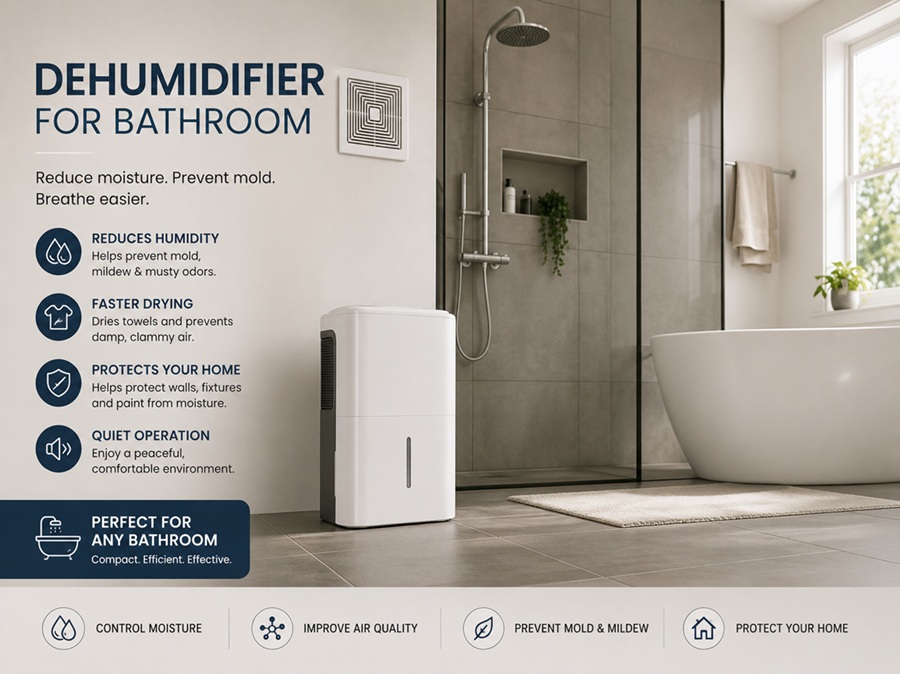

A dehumidifier for the bathroom is a device that pulls excess moisture out of the air to fight the damp, mold, and musty smells that thrive in a small, steamy room. In short, yes, one can help, especially in a bathroom with poor ventilation or no window, where a compact dehumidifier keeps humidity low enough to stop mold and mildew before they start. For many bathrooms, though, a good exhaust fan does much of the same job, so the real question is which approach, or combination, fits your space.
Bathrooms are the dampest room in most homes, and that moisture does real damage over time: black mold in the grout, peeling paint, warped trim, and a smell that never quite clears. A dehumidifier tackles the root cause by drying the air. This guide explains when one is worth it, which types suit a small bathroom, how to size it, and how it compares to simply ventilating better.
| What it does | Removes excess moisture from bathroom air |
| Main benefit | Prevents mold, mildew, and musty odors |
| Best for | Windowless or poorly ventilated bathrooms |
| Common types | Compact refrigerant, desiccant, mini rechargeable |
| Ideal humidity | Around 40% to 50% relative humidity |
| Alternative | A strong, correctly sized exhaust fan |
| Placement | A dry, level spot with airflow |
| Maintenance | Empty the tank and clean regularly |
Why Bathroom Moisture Is Such a Problem
Every hot shower releases a burst of steam, and in a small enclosed room that humidity has nowhere to go. It settles on cold surfaces, tile, mirrors, walls, and grout, and lingers. Given enough repetition, that constant dampness becomes the perfect breeding ground for mold and mildew, which are not only unsightly and smelly but can affect indoor air quality.
Beyond mold, chronic moisture quietly damages the room itself. It causes paint to bubble and peel, wooden trim and vanities to warp, and metal fixtures to corrode faster. Controlling humidity is therefore not just about comfort or smell; it protects the finishes and materials you paid to install.
Do You Actually Need One?
Not every bathroom needs a dehumidifier, so it helps to know the signs. A bathroom that dries out quickly after a shower and has a good working fan or window may be fine as is. But if you see the tell-tale symptoms of trapped moisture, a dehumidifier, better ventilation, or both are worth considering.
- Recurring black mold or mildew in grout, corners, or on the ceiling
- A persistent musty or damp smell that never fully clears
- Condensation lingering on mirrors and walls long after a shower
- Peeling paint, warped trim, or a swollen vanity
- No window and a weak or absent exhaust fan
Types That Suit a Bathroom
Bathrooms are small and damp, so the right dehumidifier is usually compact rather than a large basement unit. The main types differ in how they pull water from the air and how they suit a small, sometimes unpowered, space.
| Type | How It Works | Bathroom Fit |
| Compact refrigerant | Cools air to condense moisture | Good for larger or warm bathrooms |
| Desiccant | Absorbs moisture with a drying agent | Great for cool rooms, runs quiet |
| Mini rechargeable | Small absorbent or Peltier unit | Small spaces and low moisture |
| Disposable moisture absorber | Crystals pull moisture passively | Tiny spaces, no power needed |
How to Size and Choose One
The key to picking well is matching the unit to your bathroom size and moisture level. A small powder room needs far less capacity than a large family bathroom with a walk-in shower. Manufacturers rate dehumidifiers by how much moisture they remove and the room size they suit, so match that to your space rather than buying the biggest or cheapest.
- Match the unit’s rated room size to your bathroom
- For quiet operation near a bedroom, favour a desiccant model
- Look for auto shut-off when the tank is full
- Choose a design that is easy to empty and clean
- Consider a humidistat so it maintains a set humidity level
Dehumidifier vs Better Ventilation
Before buying a dehumidifier, it is worth asking whether your bathroom simply needs better ventilation, because the two solve the same problem differently. A properly sized exhaust fan, run during and for a while after each shower, vents humid air straight outside, which is often the most effective and lowest-maintenance fix. A dehumidifier, by contrast, removes moisture from the air already in the room and collects it in a tank you must empty.
In many bathrooms the best answer is both, or the right one for your situation. If you have no fan and cannot easily add one, a dehumidifier is a practical workaround. If your fan is weak or you never run it long enough, upgrading or using it properly may solve the problem without another appliance. For stubbornly damp, windowless bathrooms, combining a good fan with a compact dehumidifier gives the most reliable moisture control.
Getting the Most From It
However you tackle the moisture, a few habits keep humidity down. Run your exhaust fan during every shower and for a good while afterward. Wipe down glass and tile after showering if mold is a persistent problem. Keep the dehumidifier on a dry, level surface with air space around it, and empty and clean the tank regularly so it does not become a source of odor itself. Aiming to hold the room around 40 to 50 percent relative humidity is the target that discourages mold without over-drying.
Frequently Asked Questions
Does a bathroom really need a dehumidifier?
Not always. A bathroom with a good exhaust fan or a window that dries quickly may be fine. But windowless or poorly ventilated bathrooms with recurring mold or musty smells benefit clearly from a dehumidifier or improved ventilation.
Is a dehumidifier better than an exhaust fan?
They solve moisture differently. A fan vents humid air outside and needs little upkeep, while a dehumidifier pulls water from the air into a tank. For very damp bathrooms, using both often gives the best results.
What size dehumidifier do I need for a bathroom?
Usually a compact one, since bathrooms are small. Match the unit’s rated room size and moisture removal to your bathroom rather than oversizing, and favour quiet desiccant models if the bathroom sits near a bedroom.
Will a dehumidifier stop bathroom mold?
It helps significantly by keeping humidity too low for mold to thrive, especially combined with good ventilation and regular cleaning. Existing mold should still be cleaned away, with the dehumidifier preventing its return.
Where should I place a bathroom dehumidifier?
Put it on a dry, level surface with air space around it so moist air can circulate to the unit. Keep it clear of walls and out of the direct splash zone, and empty the tank regularly to avoid odors.
Can I run a dehumidifier all the time in a bathroom?
You can, but it is better to target the damp times and aim for around 40 to 50 percent humidity. A humidistat model that switches off at the set level avoids over-drying and saves energy.
What humidity should a bathroom be?
Keeping relative humidity roughly between 40 and 50 percent discourages mold and mildew without making the room feel stuffy. A cheap hygrometer lets you check whether you are in that comfortable range.
Daily Habits That Keep Moisture Down
Whatever equipment you use, a handful of everyday habits do a surprising amount of the work in keeping a bathroom dry. The biggest is simply moving humid air out fast. Running the exhaust fan during every shower and leaving it on for fifteen to twenty minutes afterward clears the burst of steam before it can settle into grout and drywall.
Small touches add up too. Squeegeeing the shower glass and walls after use removes standing water that would otherwise evaporate into the room. Leaving the shower door or curtain open between uses lets the enclosure dry rather than staying damp and dark, which is exactly the condition mold loves. Hanging towels to dry fully, rather than leaving them bunched, cuts another source of lingering moisture.
- Run the exhaust fan during and after every shower
- Squeegee glass and tile to remove standing water
- Leave the shower open to air out between uses
- Spread towels to dry rather than bunching them
- Fix leaks promptly, since even small ones raise humidity
- Check the target humidity sits around 40 to 50 percent
Final Thoughts
A bathroom dehumidifier is a smart fix for the damp, mold, and musty smells that plague small or windowless bathrooms, but it is not the only tool. Start by making sure your ventilation is doing its job, then add a compact dehumidifier sized to your space if moisture still lingers. Keep humidity in the 40 to 50 percent range, stay on top of emptying and cleaning, and you will protect both your health and the finishes in the dampest room in the house.