
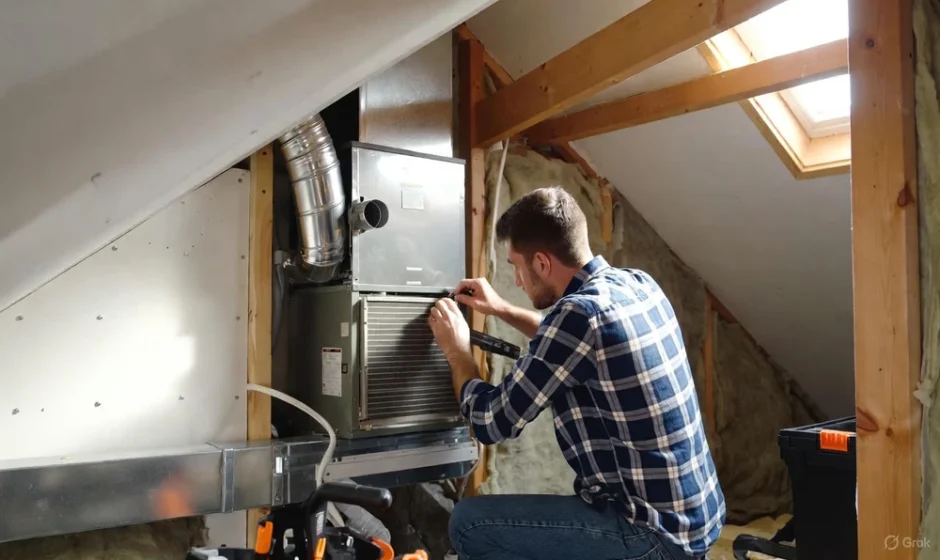

A particular smell drifts through Michiana houses on the first truly cold morning of fall. Someone nudges the thermostat up, the furnace fires for the first time in months, and a faint scorched odor rolls out of the registers. It is usually just a summer’s worth of dust burning off the heat exchanger, and it fades within an hour. That small moment marks something bigger, though. Your home is switching jobs, from pushing heat out to holding onto it, and the weeks around that switch are the best time to catch problems before the snow does.
Plenty of homeowners across southwest Michigan and northern Indiana call in a local crew like SAMS Heating and AC for this seasonal changeover. The Edwardsburg team has worked on furnaces, heat pumps and ductless systems around the region since 2002, including the heating setups found in manufactured homes. Even so, much of the handoff is something you can understand and partly handle on your own, and it helps to walk the house the way a technician would.
Start Outside Where Summer Did the Heavy Lifting
The outdoor condenser spent months dumping heat from your living room into the backyard, and unless you own a heat pump, it now sits mostly idle. Clear leaves, grass clippings and cottonwood fluff from the fins with a garden hose, spraying gently from the inside out. Trim shrubs back so the cabinet has about two feet of open space on every side.
Covering the unit is where people often go wrong. Wrapping a central air condenser in a plastic tarp traps moisture against the coil and gives mice a sheltered winter home full of wiring to chew. If you want protection from falling ice, a breathable cover over the top alone, or a sheet of plywood weighted with a brick, is enough. A heat pump should never be covered at all. It keeps running through winter and needs open airflow to pull warmth from the outdoor air.
The Thermostat Deserves More Than a Flip of the Switch
Moving the setting from cool to heat seems trivial, but it is also the right moment to replace batteries in thermostats that use them. A weak battery is behind a surprising number of “no heat” complaints on the first cold night.
Heat pump owners have one more setting to understand. Emergency heat, sometimes labeled EM or AUX, hands the work over to electric resistance strips. It exists for genuine breakdowns, and leaving it on by accident can send an electric bill climbing fast. Auxiliary heat switching on briefly during a defrost cycle or a hard cold snap is normal. Auxiliary heat running nonstop on a mild 40 degree afternoon is a sign something needs attention.
Smart and programmable thermostats need their schedules revisited too, since summer setbacks rarely make sense in January. ENERGY STAR’s guide to smart thermostats is a solid reference on how scheduling and setback habits shape heating efficiency.
A Thin Slot That Decides a Lot
The air filter is the cheapest part of the system and one of the most influential. A clogged filter starves the blower of air, which makes the heat exchanger run hotter than it should and can trip safety limits that shut the furnace down mid cycle.
Standard one inch filters generally need changing every one to three months, more often in homes with pets, smokers or ongoing renovation dust. Thicker four or five inch media filters can last six months to a year. Check the arrow on the frame so it points toward the furnace. Resist the urge to buy the highest MERV rating on the shelf unless your system was designed for it, because a very dense filter can choke airflow in older equipment.
Inside the Furnace Cabinet
Lifting the furnace panel is not a homeowner job, but knowing what a proper tune up covers helps you judge whether one was done well. A thorough fall inspection usually includes the following.
- Examining the heat exchanger for cracks, which can allow combustion gases, carbon monoxide among them, to mix with the air you breathe
- Cleaning the flame sensor, a slim metal rod whose film of residue is one of the most common reasons a furnace lights and then shuts off seconds later
- Testing the hot surface igniter and checking gas pressure
- Inspecting the blower motor, belts on older units and electrical connections
- Measuring temperature rise and confirming the safety switches actually trip
While the furnace is getting attention, press the test button on every carbon monoxide detector, especially those near bedrooms. Clear the area around the furnace as well. Paint cans, laundry piles and cardboard boxes have no business sharing a closet with an open flame.
The White Pipes on the Side of the House
High efficiency furnaces, the ones rated 90 percent AFUE and above, vent through PVC pipes that usually exit a side wall near ground level. Lake effect snow piles up fast in this part of the Midwest, and a drift that buries those pipes will cause the furnace to shut itself off as a safety measure. After every heavy snowfall, walk out and make sure both openings are clear. Leaves, bird nests and wasp activity can block them just as easily in autumn.
These furnaces also produce water as a byproduct. The condensate drains through a small line, often with a little pump, and a line running through an unheated garage or crawlspace can freeze solid. When it does, the furnace stops. Insulating that run is a small job that prevents a cold night of frustration.
Winter Air Brings Its Own Complaints
Cold outdoor air holds very little moisture, so once it is heated indoors the relative humidity plummets. Dry skin, static shocks, scratchy throats and gaps opening between hardwood boards all trace back to it. Most homes feel comfortable at roughly 30 to 40 percent humidity in the coldest months. Going higher tends to fog windows and invite mold along sills. If you have a whole home humidifier, its water panel should be replaced each season.
Walk through the rooms and check that couches, rugs and holiday storage bins are not sitting on top of supply registers or blocking return grilles. Closing vents in unused rooms sounds like a money saver, yet it raises pressure inside the ductwork, strains the blower and often saves nothing.
Ductless Heads and Mobile Homes Follow Different Rules
Mini-split systems skip ductwork entirely, but their indoor heads have washable filters that clog quickly and should be rinsed about once a month during heavy use. The outdoor unit ought to sit on a stand or bracket above the typical snow line, with room for defrost meltwater to drain away rather than refreeze around the base.
Manufactured homes come with their own quirks. Most use a downflow furnace tucked in a hallway closet, sending heat into ducts that run through the belly of the home. A torn underbelly wrap or a crossover duct that has slipped loose between the halves of a double wide can pour heat straight into the crawlspace. The louvered furnace closet door matters too, because it supplies combustion air, and any replacement furnace needs to be one rated for manufactured housing.
Sounds and Signs That Call for a Professional
Some warnings are easy to dismiss until they become an emergency. A loud bang when the burners light can point to delayed ignition. Screeching usually means a blower bearing is wearing out. A furnace that switches on and off every few minutes, a flame that burns yellow instead of crisp blue, rooms that never quite warm up and gas bills creeping upward without explanation all deserve a professional look.
Age plays a role as well. Furnaces commonly last somewhere between 15 and 20 years, and once yours crosses that line, a repair estimate should be weighed against replacement. Cold climate heat pumps have improved enough that many Michigan and Indiana households now consider them a realistic primary heat source, often paired with a gas furnace as backup for the deepest freezes.
That burning dust smell on the first chilly morning will come and go no matter what. The difference a little preparation makes is everything that follows it, a furnace that starts reliably, air that does not crackle with static, and a January without a 2 a.m. scramble for space heaters.